What is Claude AI? Models and guide (2026)

What is Claude AI?
Claude AI is an advanced language model developed by Anthropic, a company specializing in building safe and user-friendly AI systems. Claude AI works in a way similar to other language models, like ChatGPT, but with a focus on being extra safe and ethical.
If AI itself is new to you, start with what AI is and how artificial intelligence works.
How does Claude AI work?
The model is designed to understand and generate text based on the questions or instructions it receives. This means that Claude AI can help with tasks such as writing texts, analyzing data, and providing recommendations. It can be used in many different contexts, such as customer service, education, and research.
Safety and Ethical AI
One of the things that sets Claude AI apart from other AI models is the company's focus on safety and ethics. Anthropic has placed great emphasis on building Claude AI with safety principles in mind, which reduces the risk of the model being used in harmful ways or generating inappropriate responses.
Claude AI's Applications
Claude AI can be used in a variety of situations, from helping businesses automate their workflows to supporting researchers with complex analyses. Thanks to its flexibility and user-friendliness, it's a popular choice for both individuals and companies.
Claude vs ChatGPT
Which of the models is actually better?
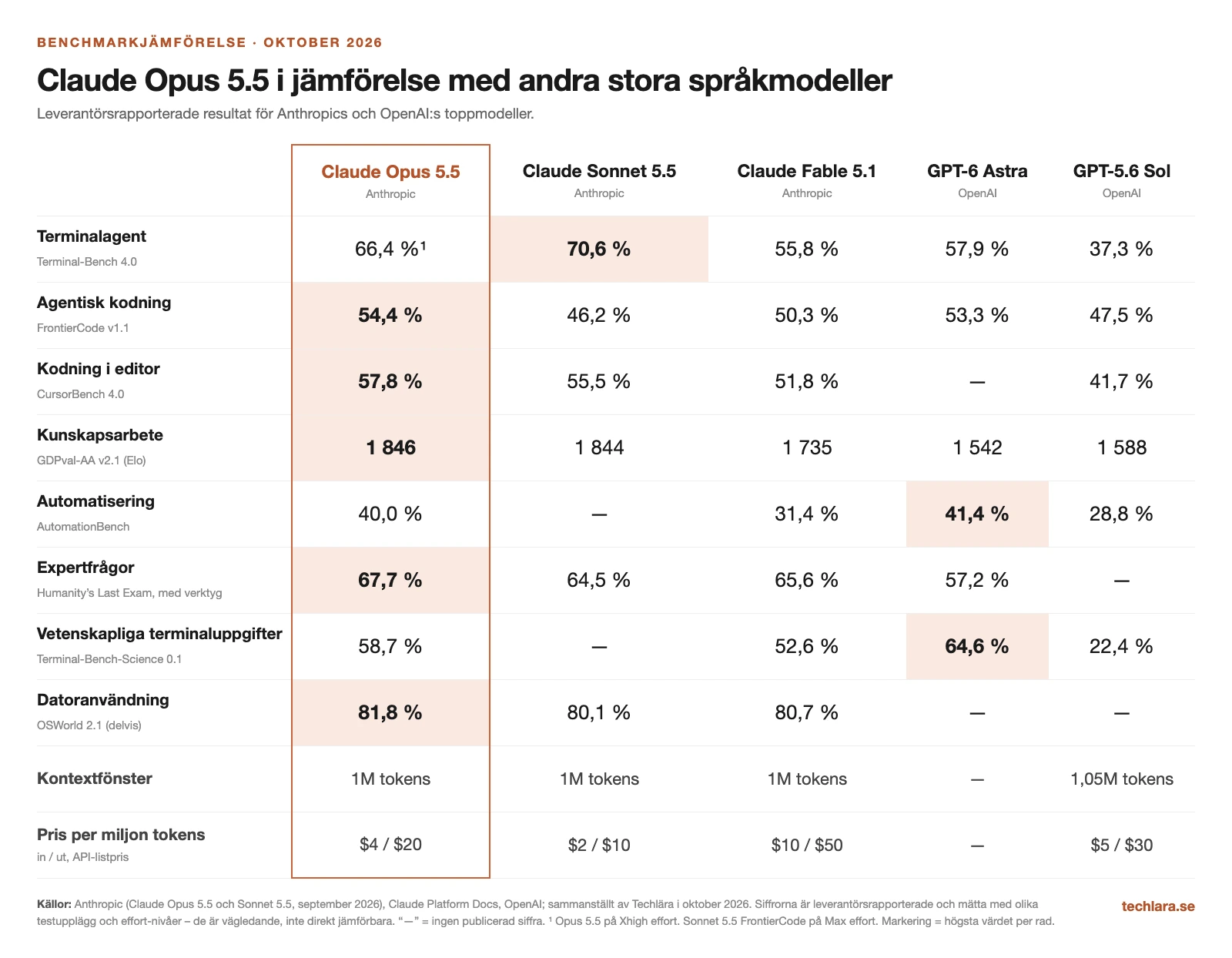
ChatGPT is known for its versatility, with features like image generation and internet access, making it suitable for a wide range of tasks. Claude, on the other hand, offers cheaper API access and a larger context window, meaning it can process more data simultaneously.
In several benchmark tests, Claude has shown to perform better than ChatGPT in specific areas. For example, Claude has a larger context window, allowing it to handle longer text segments more effectively. Additionally, Claude tends to produce more human-like and less generic responses, making it a better choice for creative writing tasks. Even in coding, many prefer Claude over ChatGPT. The third candidate is Gemini, Google's model, which wins on something else entirely: it is built into Gmail, Docs and Android, so if you already live in Google Workspace that integration often outweighs the model differences.
Computer use
Anthropic has introduced "computer use" as a beta feature in Claude 3.5 Sonnet, making it possible for the AI model to interact with computers in a way that mimics human use. By interpreting screen content, moving the mouse, clicking, and typing text. This experimental feature automates repetitive processes and can perform complex tasks, which can improve productivity for both businesses and individuals.

Claude in 2026 — Opus 5.5, Sonnet 5.5 and Fable 5.1
Claude has come a long way since this guide was first written. Anthropic's current lineup is Claude Opus 5.5 (released 22 September 2026 and Anthropic's recommended starting point for long-running agentic coding and knowledge work, $4 in / $20 out per million tokens), Claude Sonnet 5.5 (28 September 2026, the fast all-rounder at $2 / $10), Claude Fable 5.1 (the most capable model, for the hardest reasoning and long autonomous workflows, $10 / $50; see Fable 5 price, access and Fable 5.1) and Claude Haiku 5.5 (7 October 2026, the fastest and cheapest, built for high-volume work such as classification, routing and subagents: $0.10 / $0.50 for prompts up to 100,000 tokens, a tenth of what Haiku 4.5 cost). Older models such as Opus 5, Sonnet 5, Fable 5 and Haiku 4.5 are still available but have been superseded. All four current models have a 1M-token context window.
Two developments stand out:
- Claude Code — a coding agent that works directly in your terminal and codebase, popular with developers for real engineering work, not just snippets. Its behaviour can be extended with reusable instruction packages — see our guide to Claude Skills and how to install them. OpenAI's counterpart is Codex — see what Codex is and what it costs.
- MCP (Model Context Protocol) — an open standard from Anthropic for connecting AI to tools and data sources, now widely adopted across the industry.
What was an experimental "computer use" beta back in Claude 3.5 Sonnet is now a mature capability: Claude can operate software, browse, and complete multi-step tasks far more reliably. The same idea, as a free program you run yourself, made OpenClaw — first called Clawdbot, after Claude one of the most talked-about AI projects of 2026. And since August 2026 Claude marks everything it generates with an invisible watermark — see what the EU AI Act means for your business.
Conclusion
Claude AI is a powerful tool that helps users solve problems and generate content safely and efficiently. It's an exciting development in AI and has the potential to make a big difference in many industries.
If you want to see what can actually be built on these models, here are the AI solutions we have built — chatbots, AI agents and apps.
Updated: 2026-10-09